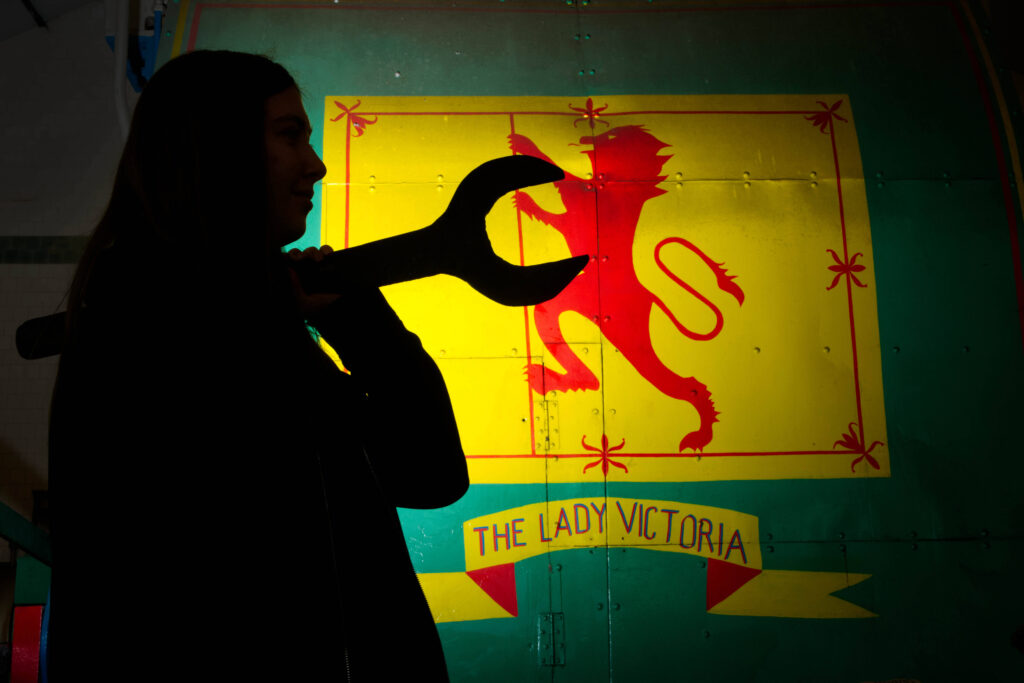
Newly approved concept designs have been unveiled today to transform a 131-year-old former coal-fired ‘super-pit’ into a renewable energy hub and immersive ‘arrested decay’ heritage experience. The project also includes plans to safeguard specialist mechanical skills at risk of disappearing.
The unveiling marks a major step forward for National Mining Museum Scotland, with plans to transform underused areas around the Lady Victoria Colliery into renewable energy sources for the local community. The project is being supported by a green-energy partnership of more than 250 engineers, designers and sustainable development specialists alongside a newly formed design team.
It will also create conserved industrial heritage exhibits, opening up areas long closed to the public. This includes plans to involve engineering students in restoring the site’s historic winding engine to working order.
As part of the Museum’s Be Part of Our Future fundraising drive, funding is now being sought from investors to help make these plans a reality. The museum needs £450k and has already secured £140k funding through donations from the public, Museums Galleries Scotland, CARES, Architectural Heritage Fund and National Lottery Heritage Fund. The museum is now seeking lead supporters in 2026 to unlock the next phase.
Unveiling the first concept designs for the first time, Henry McLeish, Chair of National Mining Museum Scotland said: “As a legacy of an industry that powered the Industrial Revolution and shaped the Scotland we know today, the National Mining Museum Scotland has long been a beacon of innovation and engineering excellence. It feels only right that we continue that legacy in everything we do. With the need for renewable energy becoming ever more urgent, and the specialist mechanical skills once needed to power our site disappearing, we’ve been working closely with engineers, architects and pioneers to explore how we can best transform our Museum to meet the needs of future generations.
“We’re thrilled to share some of those proposals today, but of course, they will only become a reality if we can secure sufficient early investment. We’re incredibly grateful to everyone who has supported us so far and would welcome conversations with anyone interested in helping drive regeneration for years to come.”
Driving innovation in renewable energy and heritage conservation
The museum has been exploring the best use of the site with a range of experts, including Max Fordham (a partnership of over 250 engineers, designers and consultants, working with the built environment, to deliver a sustainable future and a thriving planet). Together they have identified that parts of the site would be ideal for renewable energy installations, such as solar panels, and safe battery storage. While the former boiler house presents opportunities for an immersive ‘arrested decay’ visitor experience.
Speaking about their involvement Kai Salman-Lord partner at Max Fordham said: “It’s been incredibly exciting to work with National Mining Museum Scotland to explore the feasibility of the site in linking industrial heritage preservation with practical energy innovations that support community well-being, local skills development, and resilience in a rapidly changing energy landscape. There are so many areas of the Lady Victoria Pit that offer opportunities to achieve this, and it would be wonderful to see the Museum secure the funding needed to make it a reality.
“And just as it was at the heart of coal mining all those years ago, good engineering remains central to delivering this in a way that is both sustainable and respectful of the historic environment.”
Safeguarding at risk engineering skills
With sufficient investment, the Museum aims to restore the colliery’s 1894 winding engine, safeguarding a remarkable piece of industrial heritage while creating a rare opportunity for future engineers to learn mechanical skills that are fast disappearing. Once the powerhouse of the site until its closure in the 1980s, the Winding Engine remained a core visitor attraction before falling out of operation six years ago.
Explaining why its revival is so important, conservation engineer Jim Mitchell with JPS Restoration, who is currently working on the restoration of the RRS Discovery in Dundee, said: “We are entering a critical period in large object conservation, where traditional skills are rapidly disappearing. The time to address this unique piece of engineering history is now, through the restoration of the National Mining Museum Scotland’s winding engine at Lady Victoria Colliery.
“We must use the opportunity to train others. In many ways this is almost as important as saving the engine itself. I hope the Museum will secure the funding needed to create this immersive training opportunity for a new generation of technicians who will ensure our industrial heritage is preserved intelligently and skilfully.”
Showcasing arrested decay
Supported by the Architectural Heritage Fund (AHF) the redevelopment will see the transformation of the Boiler House, an area never-before-seen by most visitors, into a new immersive ‘arrested decay’ visitor experience.
Gordon Barr, Development Manager (Scotland) at AHF said: “The Architectural Heritage Fund exists to help communities find enterprising ways to revitalise the old buildings they love, so it is incredibly exciting to be able to support these proposals being developed. Like the historic boilers, I’m all fired up to see these exciting plans coming together for a nationally important Industrial heritage site.
“The scheme shows an exciting balance being struck between different spaces in the museum, allowing experiencing some of the site in its current state of arrested decay, telling the continuing story of its hard-working life, as well as – crucially – creating new usable and environmentally sustainable spaces for visitors and the community to use into the future as well.”
Being part of the future
National Mining Museum Scotland’s Be Part of Our Future appeal aims to preserve the memories of Scotland’s mining heritage. It is hoped it will support the museum in caring for and interpreting the nationally significant collections it houses, maintaining and repairing aspects of the A-listed colliery buildings and grounds; developing green energy and community initiatives; and enhancing the venue’s capacity to host community and cultural events across the site.
For more information about the Museum’s ambitions for transformation, and how you can help shape its future, visit nationalminingmuseum.com/ourfuture.
Discover more of National Mining Museum Scotland’s stories on YouTube @nationalminingmuseumscotland, or Facebook and Instagram @NatMiningMuseum, or visit nationalminingmuseum.com
Photography: Rob McDougall