Projects
Researching and Recognising the Role of Women Working Underground in Scottish Coal Mines Before 1842
Introduction
In recent years there has been more drive to give attention to the people that history tends to forget such as women, people from ethnic minority backgrounds, and members of the LGBTQ+ community. All of these people were involved to some extent in Britain’s mining history, from the women who worked in mines before 1842 and were family to working miners to the Lesbian and Gays Support the Miners who supported a struggling community during the 1984-1985 strike.
The history of coal mining is marked by hardship and poverty, particularly within mining communities. While much attention has been given to men and pit disasters, the experiences of women – especially those who worked underground before 1842 – are often overlooked. Helen Reid (1826-1902) is one such figure.
The Story of Helen Reid
Helen’s story was first told in The Collier’s Tale (later titled Light in Darkness or, The Miner’s Tale) [1] by James Bridges, W.S, an Edinburgh lawyer who chronicled a near-disaster in Newton Parish in 1839 when a group of thirteen people, including women and children, were trapped underground. Through his own experience in the village and a lengthy interview with Peter Hay, one of the trapped miners, Bridges highlights the courage and determination of the entire group.
Helen’s experiences were also noted in Robert H. Franks’ report to the Children’s Employment Commission in 1842 [2] which described the harsh conditions endured by children in mines and led to legislation that introduced a minimum working age of 10 years old for boys and banned women and girls from working in mines. Franks was impressed by Helen’s intelligence and described her as a “Very intelligent girl; reads well and writes; very well acquainted with Scripture history.” [3]
As with so many people of the time, Helen Reid’s life was shaped by her, and her parents’, relationship with the church. When Helen was born, her mother, Elsbeth Ross (unmarried), initially refused to share the identity of Helen’s father, John Reid, but eventually both parents acknowledged their relationship after pressure from those in the church. Elsbeth Ross and James Reid married on 2nd June 1832 and had seven children together with Helen being the eldest.
“Compared reluctantly Elsbeth Ross an un-married woman and declared that she was with child and after being solemnly ordered by the Mod [-erator] to tell the truth and being asked who was the father of her child declared that John Reid, collier, Millerhill an unmarried man is the father of the child.
“The session having heard the above declaration agree to summons the said John Reid to appear before them this day two week and be confirmed with the woman. The session closed with prayer.
“(Signed James Grierson Mod [-erator]” [4]
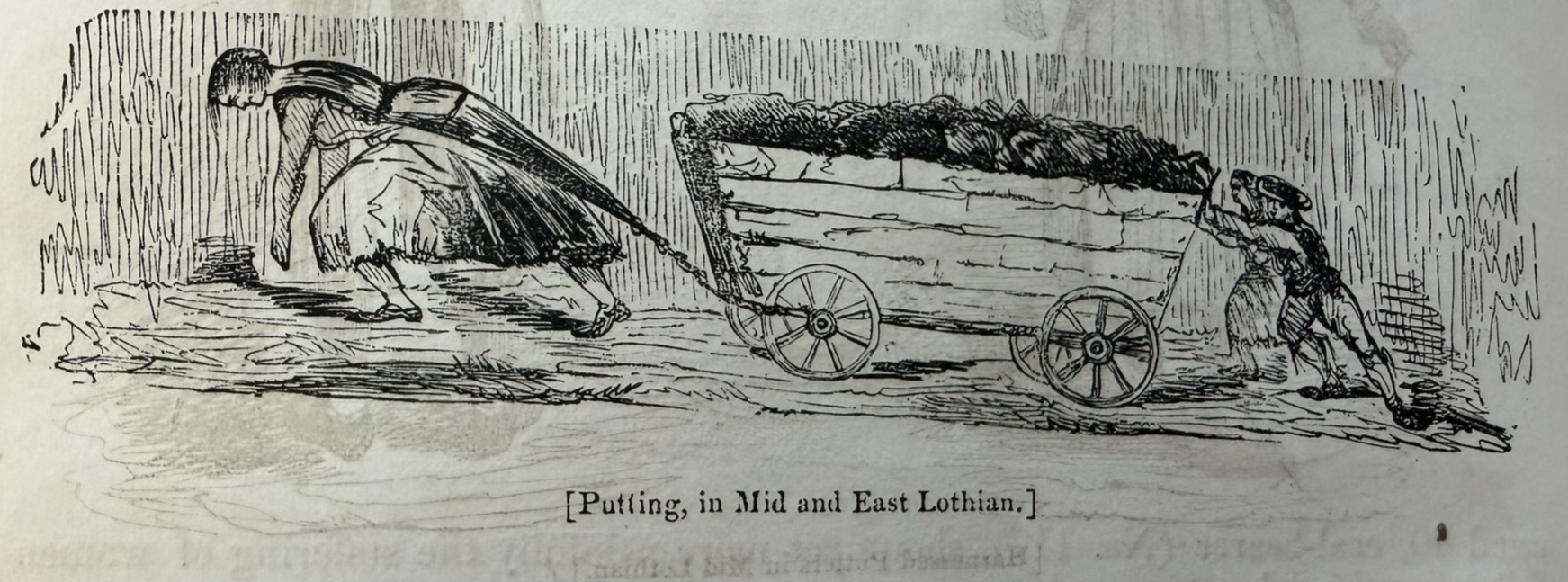
Helen began working at the High-Pressure Pit in Newton alongside her father at ten years old. Their workdays were demanding, consisting of fourteen-hour shifts, often during the night, for six days a week.
Helen’s legacy stands as a testament to perseverance and courage in the face of harsh conditions and labour. Her life story, though largely undocumented, deserves recognition for the fortitude and strength she showed.
1839 Pit Collapse
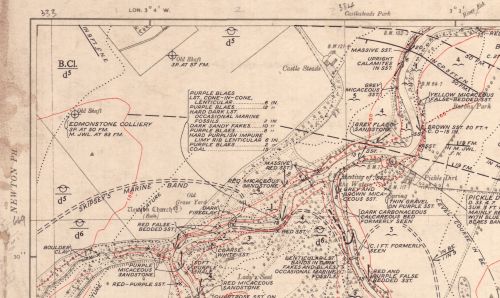
On Friday 8th March 1839 (when Helen was 13 years old) at 8pm, 13 colliers descended the 360 feet shaft at the High-Pressure Pit in Edmonstone to begin their nightshift.
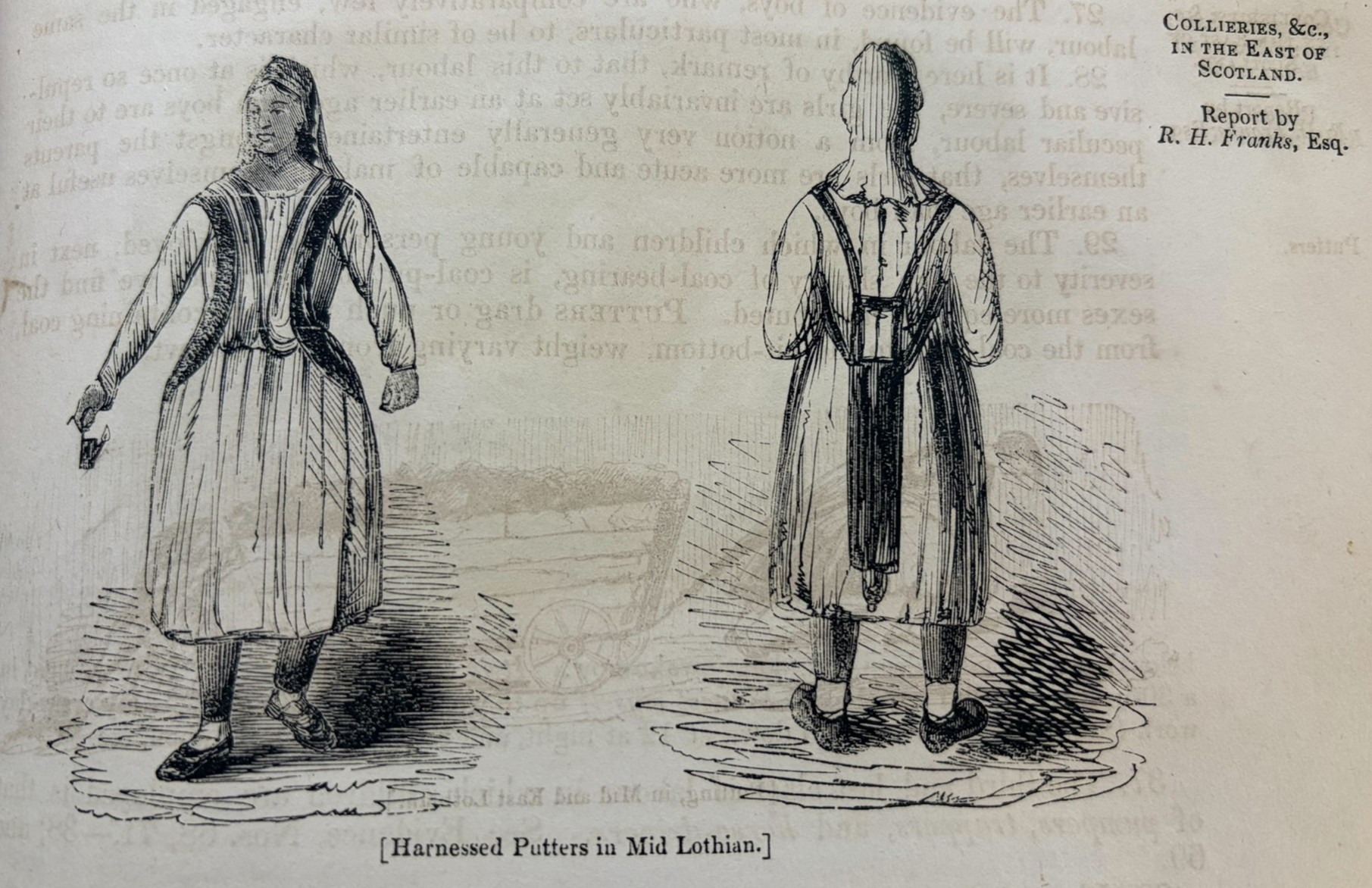
Light was supplied by a small tallow lamp, fixed on the collier’s cap which yielded little light underground and all of which went out not 24 hours after the initial collapse because of the poor quality of air. The women colliers working underground dragged heavy wagons filled with coal by a harness on all fours.
A short while later, between 9pm and 10pm, one of the colliers became fearful that the pit was going to collapse and not long after that, it did. All immediate routes of escape were cut off and the colliers feared they would die.
There was an air-gate (airway tunnel) connecting the High-Pressure Pit to the abandoned Back Dean Pit, the passage was approximately three quarters of a mile long. The amount of debris and extremely poor quality air made it seem unlikely—but not impossible—that the trapped people would be able to use to the tunnel to get out or get help.
Throughout their time trapped, there were multiple attempts made to communicate with the outside world or to try and find a way out.
1st Attempt:
Some of the party were sent to Back Dean Pit to see if help was coming, they went as far as they could and shouted to be heard but were unsuccessful. They told the others that they thought the Back Dean Pit had been filled with mud.
2nd Attempt:
Saturday 9th March – Another small group went to the Back Dean Pit to see if help was coming, they heard nothing from above and thought that the air was “closer than ever.” [5]
3rd Attempt:
Peter Hay, Jamieson Bennett, and James Reid were chosen to go and try once more. According to Peter Hay, “we came to the water’s edge, and there we sat down and consulted; when it was agreed among us that we thought the air was better, and, indeed, that it was tolerably good. […] We therefore agreed to return with tidings that there was no relief appearing from the Back Dean Pit; but that the air was better in the air-gate” [6].
4th Attempt:
Four men were sent for an extended trial of the air, they cleared the way as much as they could and the rest of the group joined them. As Peter Hay remembered, “every one following the other, and aye naming each other aloud as we marched on in our journey, to see if all were on the move.” [7]. There was deep water at some points, and the women and children had to hold onto the necks of the men and float or swim, some people fell behind and everyone waited until they caught up. When they all reached the bottom of the Back Dean Pit, everyone shouted and this time they were heard by people above. A bucket was lowered and the group was raised to the surface in “the following order:–Ellen [Helen] Reid, James Reid, Janet Shaw, first; the Jamieson Bennett, John Reid, and Margaret Yedom; then George Campbell, James Reid, and John Nicolson; and Thomas Reid, George Pride, and Betsy Campbell, and myself” [8].
During their time underground, the group attempted to keep their spirits and hopes up by praying, singing hymns, and recalling bible stories as well as talking of their loved ones on the surface. In such a dire situation, however, their discussions sometimes turned to the bleak. In his recount to Bridges, Peter Hay says that he “repeated several times that it seemed to be a dear High Pressure Pit to me, for only nine months before I had lost a beautiful daughter there, and now, to all appearance, I was to fall a sacrifice in the same place myself” [9].
Children’s Employment Commission (1842)
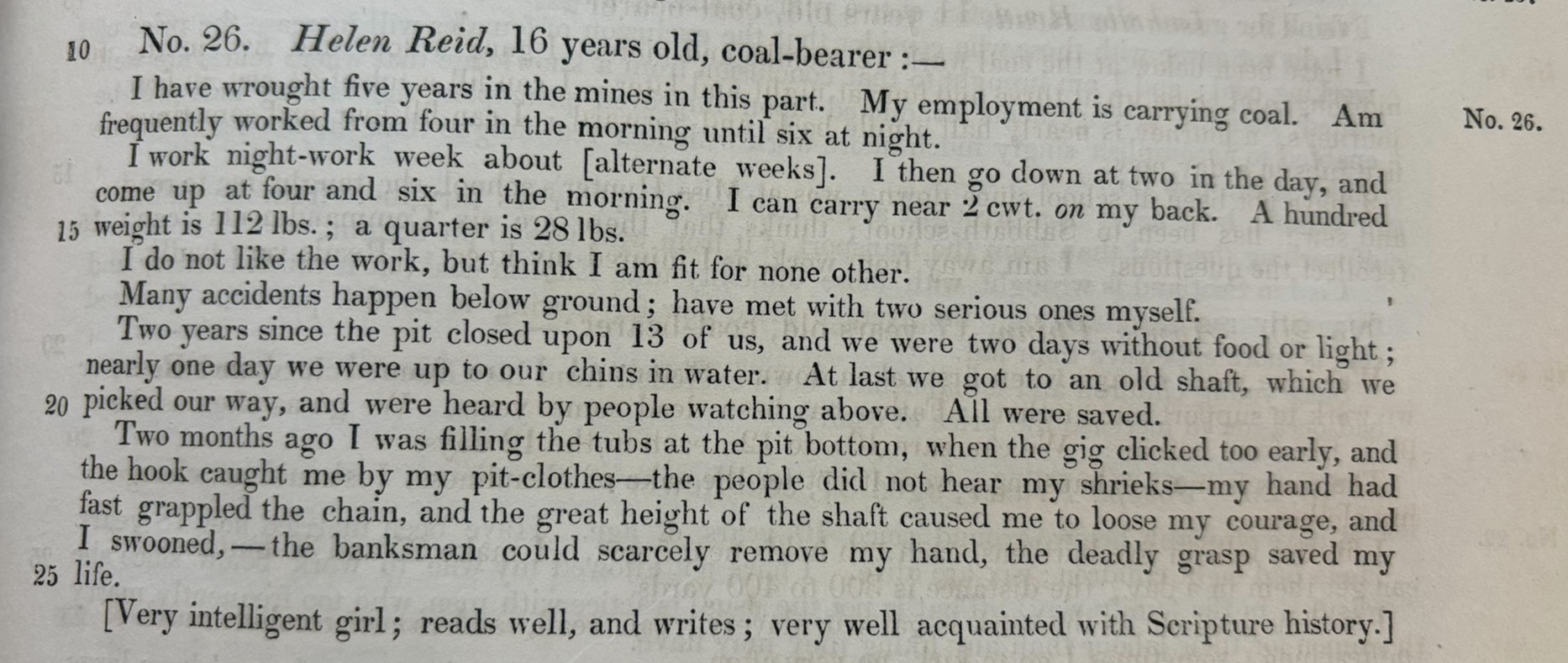
Anthony Ashley-Cooper, 7th Earl of Shaftesbury, introduced the Miners and Collieries Act in 1842 [10] to Parliament to stop the employment of women and girls of any age in coal mines and brought the minimum working age of boys to 10 years old. The working conditions were brought to light by the Royal Commission of Inquiry into Children’s Employment in which children working in coal mines were asked a variety of questions about their working lives, their responses were recorded and then published. In the East of Scotland district Robert H. Franks spoke to Helen Reid who was still working in Edmonstone colliery, Midlothian, three years after the pit collapse:
“Helen Reid, 16 years old, coal-bearer: I have wrought five years in the mines in this part. My employment is carrying coal. Am frequently worked from four in the morning until six at night.
I work night-work week about [alternate weeks]. I then go down at two in the day, and come up at four and six in the morning. I can carry near 2cwt. on my back. A hundred weight is 112lbs.; a quarter is 28lbs.
I do not like the work but think I am fit for none other.
Many accidents happen below ground; have met with two serious ones myself.
Two years since the pit closed upon 13 of us and we were two days without food or light; nearly one day we were up to our chins in water. At last we got to an old shaft, which we picked our way and were heard by people watching above. All were saved.
Two months ago, I was filling the tubs at the pit bottom when the gig clicked too early and the hook caught me by my pit clothes – the people did not hear my shrieks – my hand had fast grappled the chain and the great height of the shaft caused me to lose my courage and I swooned, – the banksman could scarcely remove my hand, the deadly grasp saved my life.
Franks: [Very intelligent girl; reads well and writes; very well acquainted with Scripture history.]” [11]
The Rest of Helen’s Life
Not many details are known of Helen’s life after she leaves the coal pits. Her father John was admitted to the Royal Edinburgh Asylum in May 1859 and died on 22nd August 1861, it is possible that the reason for his admission was psychological trauma from his experience in the 1839 pit collapse [12]
In 1844 Helen married James Marshall (both of them 18 years old). James died in 1889 of Tuberculosis. Helen died three years later in 1902 of Bronchitis, possibly from her days spent in the mines.
Research by James Burns Hogg
Introduction and Digitisation by Rachel Malcolm-Smith, Curatorial Volunteer, NMMS
*No generative AI was used to write this post*
Sources
[1] Bridges, James (1877) Light in Darkness; or, The Miner’s Tale. A True History, 3rd edition. Edinburgh: Johnstone, Hunter & Co.
[2] Franks, Robert H. (1842) ‘Report on the Collieries and Ironworks of the East of Scotland’ and ‘Evidence of the Same’ in Children’s Employment Commission: Appendix to First Report of Commissioners. Mines. Part 1: Reports and Evidence from Sub-Commissioners. London: William Clowes & Sons, pp.379-435.
[3] Franks, Robert H. (1842) ‘Evidence of the Same’ in Children’s Employment Commission: Appendix to First Report of Commissioners. Mines. Part 1: Reports and Evidence from Sub-Commissioners. London: William Clowes & Sons, p.441.
[4] Newton Kirk Session Minutes, 28th August 1825, p.61.
[5] Bridges, Light in Darkness, p.39.
[6] Bridges, Light in Darkness, p.53.
[7] Bridges, Light in Darkness, p.57.
[8] Bridges, Light in Darkness, p.61.
[9] Bridges, Light in Darkness, p.39.
[10] An Act to Prohibit the Employment of Women and Girls in Mines and Collieries, To Regulate the Employment of Boys, and to Make Other Provisions Relating to Persons Working Therein. 10th August 1842. Available at: https://www.legislation.gov.uk/ukpga/Vict/5-6/99/contents/enacted. (Accessed 14 October 2026).
[11] Franks (1842) ‘Evidence of the Same’, p.441.
[12] Mental Health Records, Scottish Indexes. Available at: https://www.scottishindexes.com/hentry.aspx?hid=125322 (Accessed 14 October 2026).
Further Reading
‘March 1839: 13 Men and Women Rescued Alive After Spending 36 Hours Entombed in Pit’, Scottish Mining Website. Available at: http://www.scottishmining.co.uk/317.html (Accessed 14 October 2026).
‘Children’s Employment Commission 1842’, Scottish Mining Website. Available at: http://www.scottishmining.co.uk/238.html (Accessed 14 October 2026).
Supporters & Accreditations