Projects
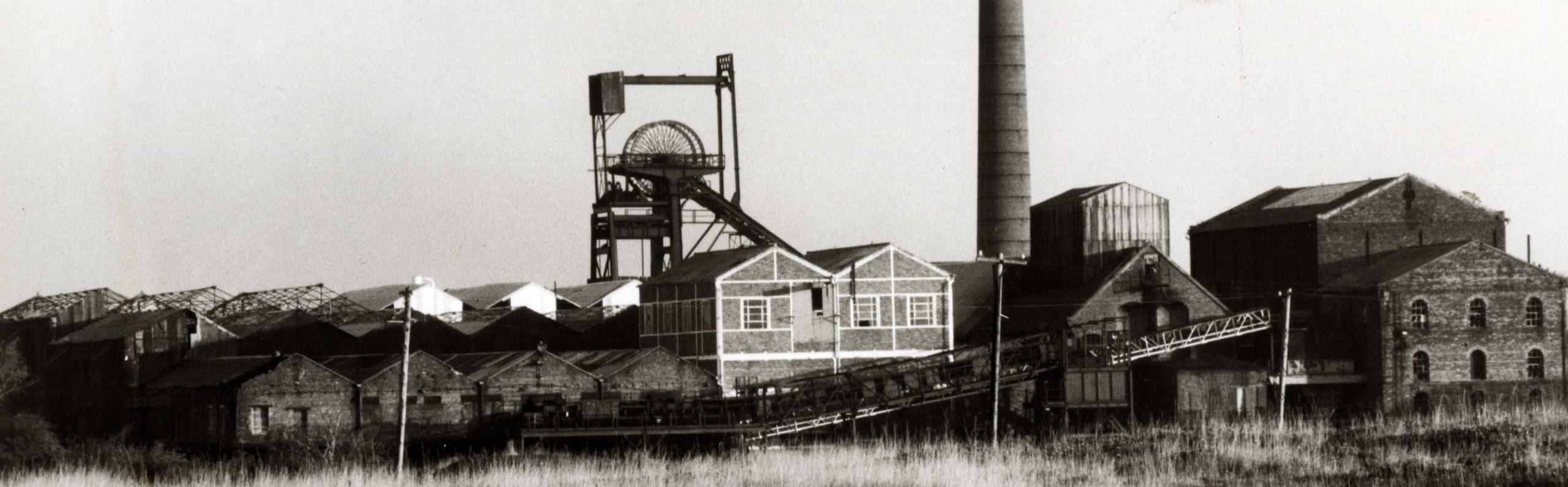
John Morison: Mining Engineer and the First Manager of the Lady Victoria Colliery
John Morison was born on 09 March 1855 in Castle Eden, just south of Peterlee in the heart of the Durham coalfield, the second son to physician John Morison and his wife Dorothea Rutherford. This area was heavily involved in coal mining, and his father was surgeon to nearby Trimdon Grange and Wingate Grange Collieries, providing medical care to miners. Both collieries were large employing over 600 men at the time. John was followed by two sisters and two further brothers, all three brothers following their father into medicine. However, young John was to break with the family tradition when he trained and qualified as a mining engineer.
In 1880, when John was only 25 years old and still early in his career, Schomberg Kerr, the 9th Marquis of Lothian was searching for a manager for his collieries which at the time comprised Shaws Pit at Kippilaw, the old Easthouses Pits, Bryans Colliery at the east end of Newtongrange, and the Lingerwood complex, known as the Newbattle Collieries, at the west end of the village, all spaced along the east of the Midlothian coalfield.
Schomberg was no idle aristocrat having had an impressive career as a diplomat followed by a seat in the House of Lords and a lengthy period of service as Secretary of State for Scotland as well as serving as Lieutenant-Colonel of the 3rd Battalion of the Royal Scots. Therefore, it can be assumed that he was a reasonable judge of character so for Schomberg to offer John the post of Manager, he must have seen personal qualities in the young man that made him confident that his coal works were in safe hands.
John took up residence in Millhall House, close to Newtongrange, and brought his two younger sisters to live with him, as his father had died in 1871 and his mother had moved to live with his older brother James who was practicing as a doctor in Hartlepool.
While in Scotland John met and married Janet Gray Mushat from the wealthy and influential Dalkeith iron master’s family in July 1881 and had twin sons Douglas Rutherford and Alan Mushat in 1885.
John arrived at a time of change for the Marquis as Shaws Pit was becoming exhausted, Easthouses was nearing the end of its workable life, and both Bryans and Lingerwood were mature mines having been sunk almost a century before in 1798. It was obvious that the deeper reserves in the bottom of the basin had to be exploited but the existing mines were not suitable to extend further and deeper into the basin.
The potential loss of reserves from the older collieries encouraged the Marquis to engage in a partnership with Archibald Hood, a successful and highly respected mining engineer and coalmaster in both Midlothian and South Wales, where he had moved to in 1867. Archibald was also owner of Whitehill Colliery on the western outcrop of the basin about three miles from Newbattle. Together they formed the Lothian Coal Company, a major entity in the Scottish coal scene intended to rival the emerging coal and iron companies growing in power and wealth in the west and central Scotland.
The new company had a considerable share capital of £500,000 with control of 22 square miles of available mineral in multiple quality seams, 600 coal wagons, numerous locomotives, brickworks, and 700 houses in both Rosewell and Newtongrange with the potential to greatly increase Newtongrange village to house the envisaged increased personnel that would be required.
John and Archibald decided a super pit had to be sunk that would utilise one of the existing Lingerwood shafts for a ventilation circuit to save money. Therefore, work commenced on the planning and sinking of the Lady Victoria shaft to exploit the deep seams down into the centre of the coal basin. As Archibald was occupied in multiple ventures, John was heavily involved in the planning of the new shaft and in the layout of the underground works as well as managing the other collieries, a measure of the regard as a mining engineer that Archibald must have held in him. The planning would be extensive as the company intended that the new mine would incorporate the latest and innovative techniques, many not practiced in Scotland at the time. This regard was reinforced with John being offered a director’s seat on the Lothian Coal Company board.
In 1894 John decided to move back to the northeast of England to take up the post of Agent and General Manager of Cramlington Colliery Company Ltd, which owned a significant number of collieries just north of Newcastle-upon-Tyne.
It is at this point that Mungo Mackay arrived at Lady Victoria as manager. In 1890, Archibald Hood took over the ownership of Polton Colliery and its associated brickworks lying just to the north of Whitehill Colliery and incorporated it in the new Lothian Coal Company. He brought a young manager who had impressed him called Mungo Mackay from his father-in-law’s Ballochmyle Colliery in Ayrshire to run Polton. With the withdrawal of John Morison to Cramlington Coal Company, Archibald brought Mungo over to assume managership of Lady Victoria and the Newbattle Collieries and to continue the progressive planning started by John and Archibald.
Eventually, John became Managing Director of Cramlington Colliery Company Ltd and a highly respected mining engineer. In addition, he was director of Cwmaman Colliery in South Wales and acted for Birtley Iron Company and Burradon and Coxlodge Coal Company as well as serving as Vice-Chairman of Northumberland Coal Owner’s Association. He found time to work in the development of the Dover Coalfield in Kent as well as working in Mexico, Newfoundland, Austria and Hungary, becoming one of the eminent mining engineers of his generation.
However, John remained as an active director of Lothian Coal Company while in the northeast eventually handing over to his son Alan Mushat Morison in 1911.
John Morison continued working up to his death in 18 Windsor Terrace, Newcastle-upon-Tyne on 07 July 1924 at the relatively early age of 69. John was one of the most eminent mining engineers of his generation, and the Lady Victoria owes much of its successful design to the work put in by John Morison and Archibald Hood.
By John Mullen, Curatorial Volunteer, NMMS
15 October 2026
Supporters & Accreditations