Projects
Curatorial Volunteers Start to Explore the Engineering History of Collieries Across the Lothians
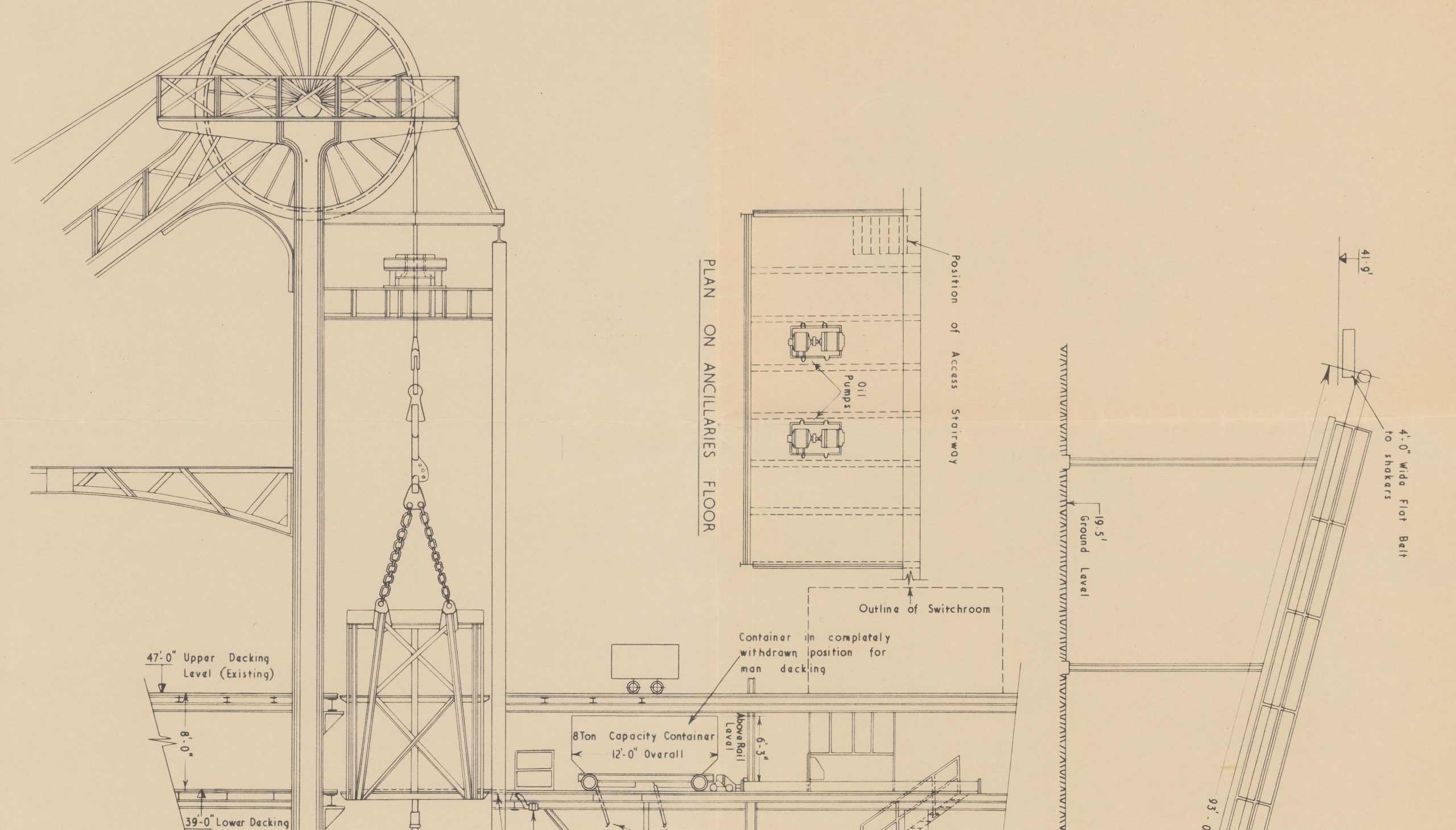
Behind the scenes at National Mining Museum Scotland, curatorial volunteers Jim and Malcolm are delving into an extraordinary part of the Museum’s collection. In our Maps and Plans Collection, we have thousands of plans, maps, and engineering drawings recording Scotland coal mining heritage.
With thousands of items still to be catalogued from coalfields across Scotland, Jim and Malcolm have begun close to home, concentrating initially on collieries around the Museum at Newtongrange: Lady Victoria Colliery, its associated Lingerwood shaft, and Easthouses Colliery.
So far, Jim and Malcolm have catalogued an extraordinary 2,500 drawings! With each drawing, they have carefully identified the drawing, recorded what the plan shows, and documented the complex engineering required to keep a major colliery working. This project will ultimately help to make these maps and plans more accessible to research visitors and engage anyone interested in learning about the technical history of Scotland’s mining industry.
Both volunteers bring considerable experience to the task. Jim, a retired town planner with a strong interest in geology and mining, was involved in the early negotiations which helped save the Lady Victoria in 1981. His particular interest in maps, mine plans, and engineering drawings makes this project a natural fit.
Malcolm trained in geophysics and has international experience in the energy sector, while his career has also encompassed senior HR and organisational consultancy. More recently, his interest in industrial heritage has included museum consultancy and membership of the International Council of Museums.
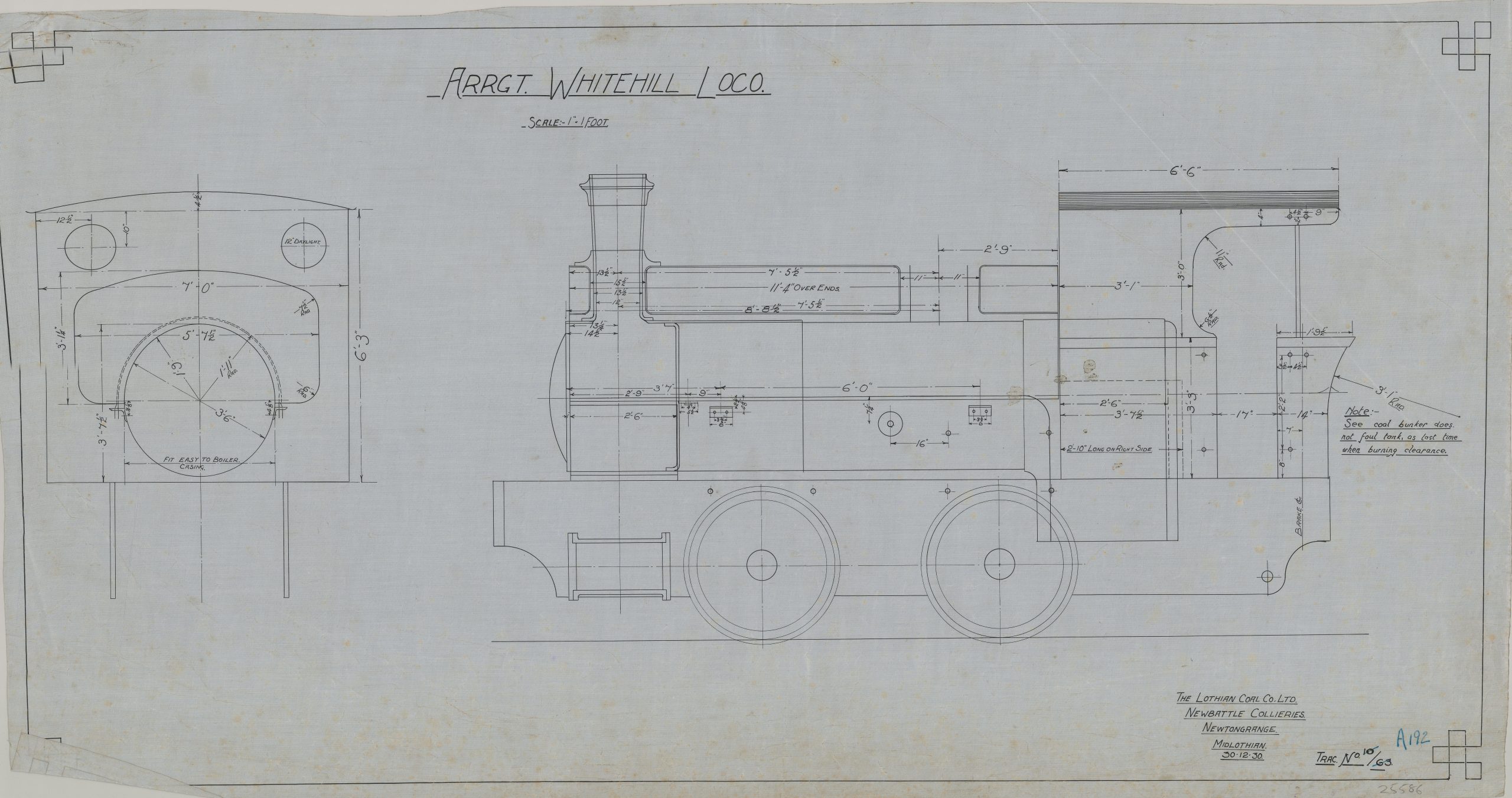
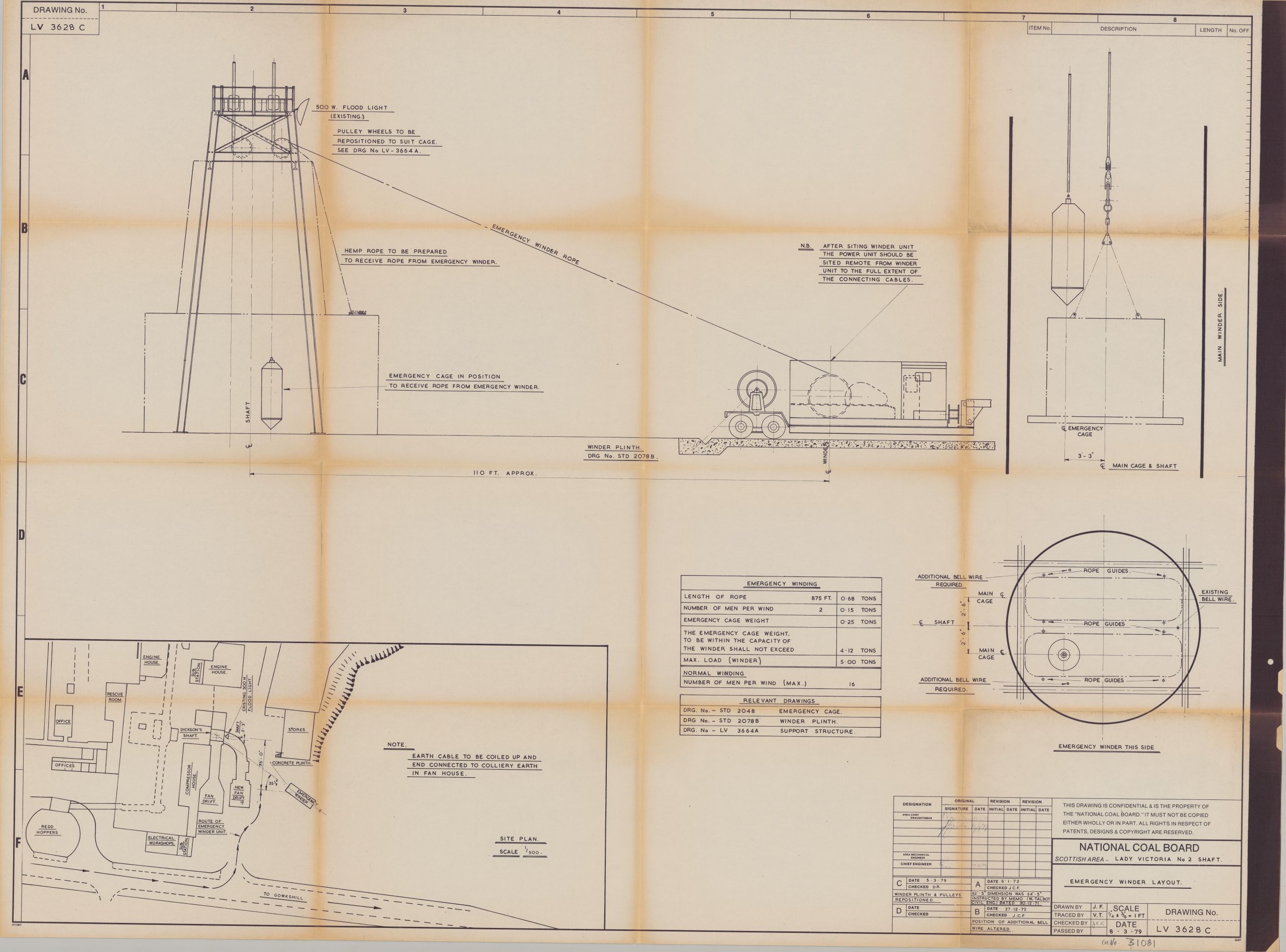
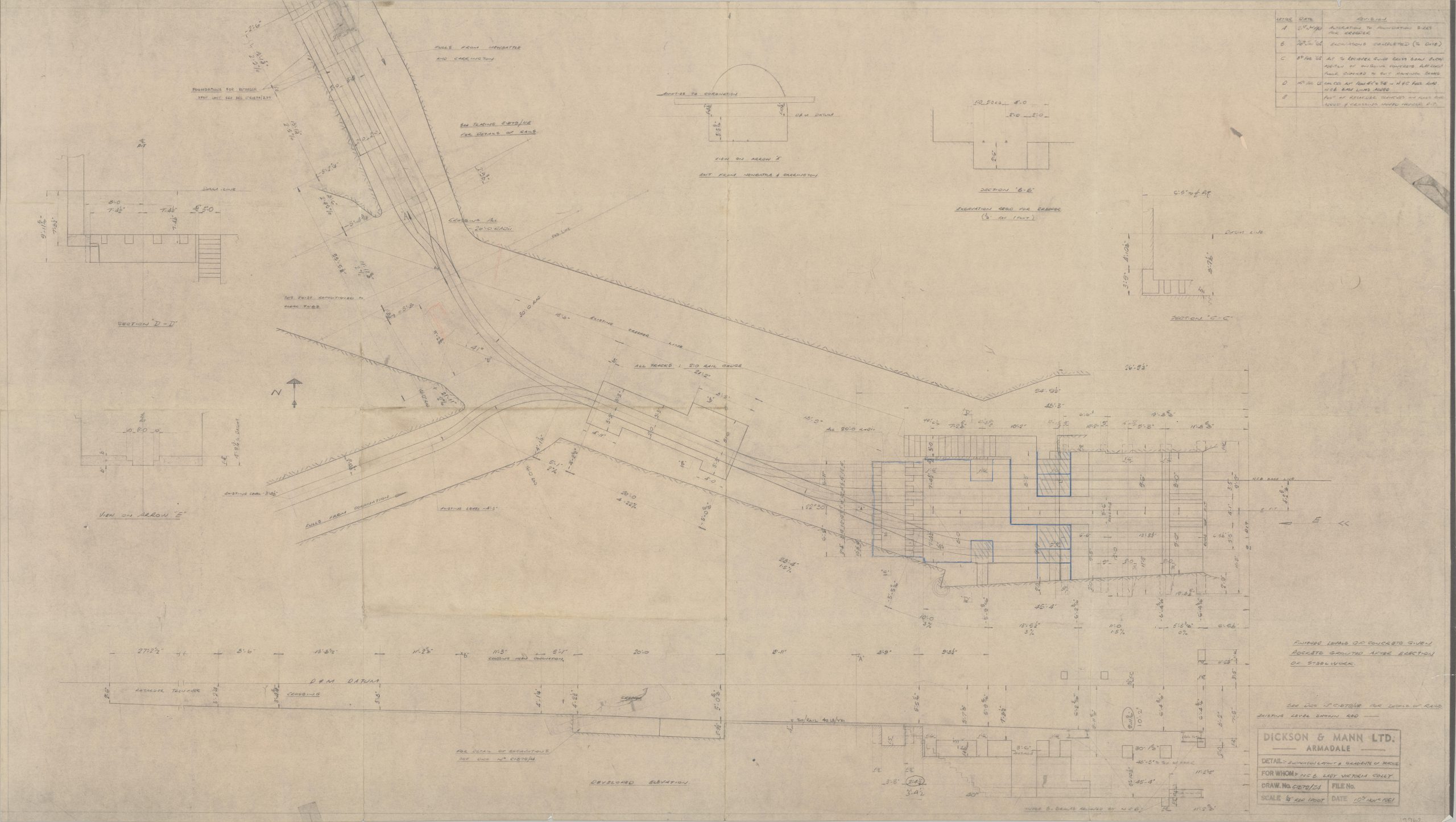
These maps, plans, and drawings demonstrate the extraordinary range of engineering involved, from detailed designs for individual brackets, supports, and fixings to substantial machinery and structures. Taken together, the drawings demonstrate that a colliery was a sophisticated, interconnected system of shafts, roadways, railways, haulage equipment, machinery and surface structures.
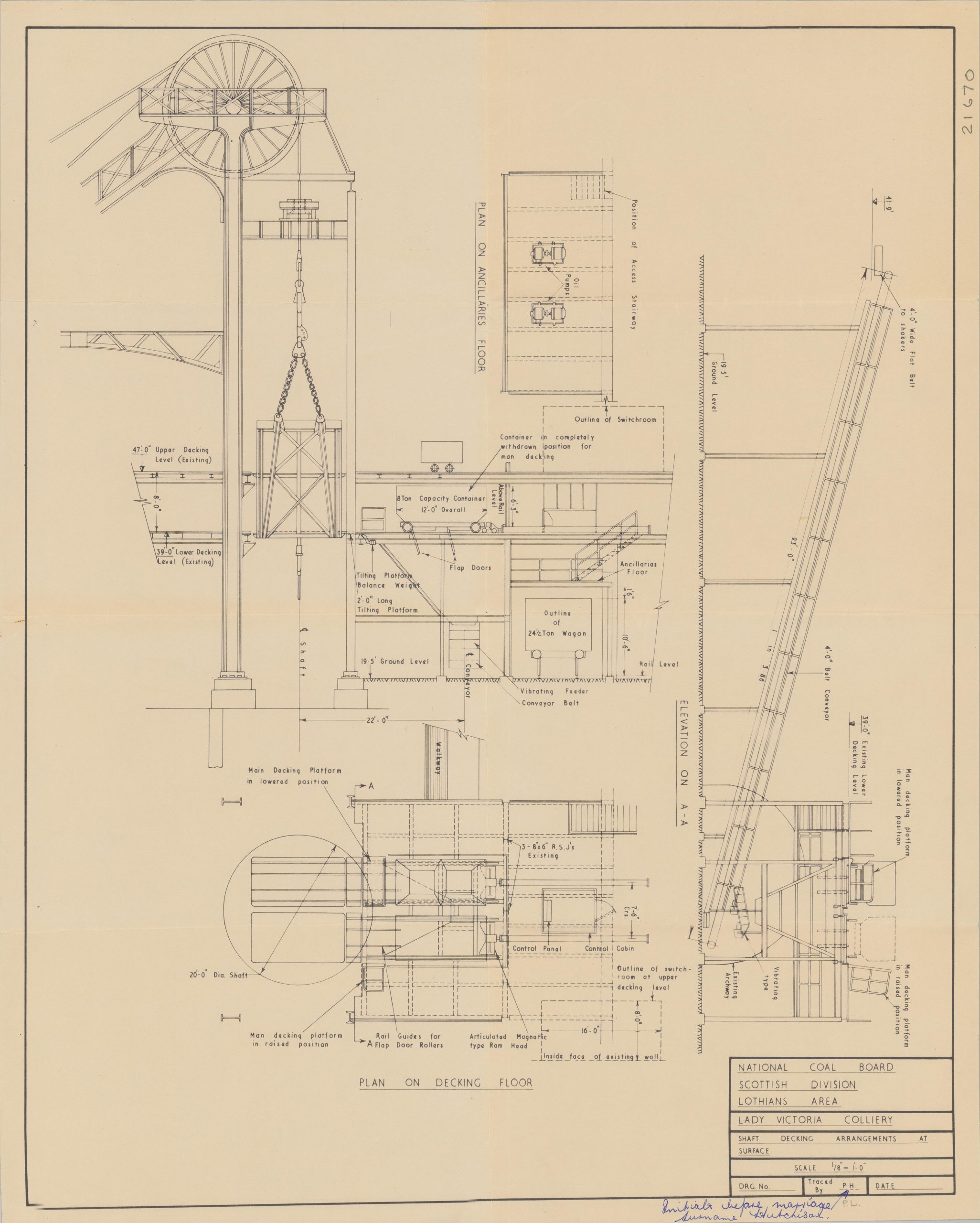
The drawings they are documenting reveal the Lady Victoria colliery from top to bottom – quite literally. There are detailed engineering plans of the shaft and pit bottom, alongside drawings showing the underground layout through which coal, men, and materials moved. Other plans record the network of underground rails, tubs, and wagons and the associated steelwork and electrics which formed the transport system of the working mine.
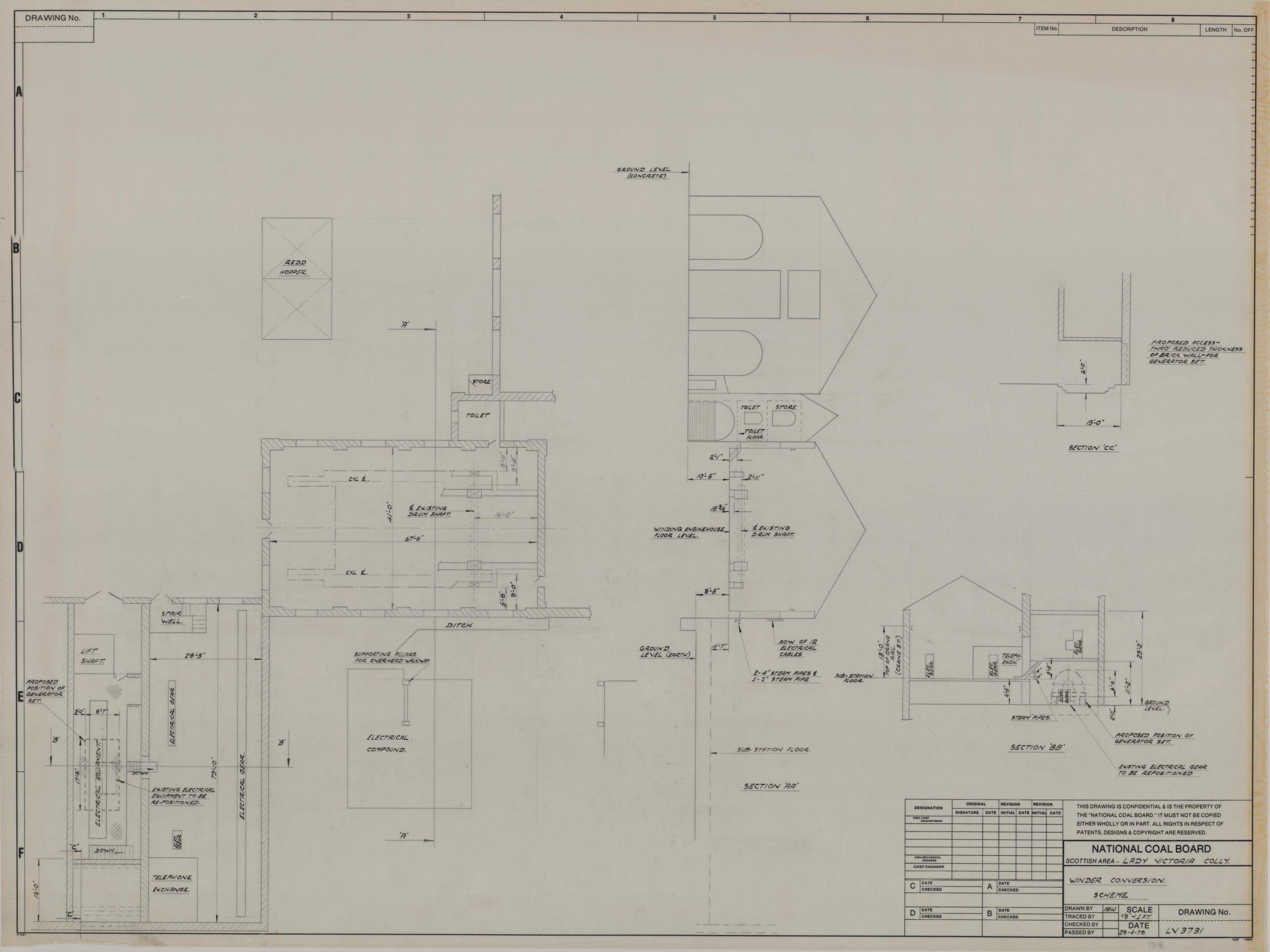
Above ground, these plans document some of Lady Victoria colliery’s most impressive engineering. Drawings show the mighty winding engine, which raised and lowered cages in the shaft, and the design and construction of the iconic headframe which has become a symbol of Scotland’s mining heritage.
This project also extends beyond Lady Victoria colliery. Jim and Malcolm are working through engineering drawings associated with the nearby Lingerwood mine shaft, adding another important piece to our understanding of mining in the Newtongrange area.
Perhaps most fascinating is the range of organisations represented. Many drawings originated on site in local National Coal Board offices, while others were produced by engineering companies supplying specialist equipment. These drawings help us to understand the extensive engineering network that supported Scotland’s coal industry.
And this is only the beginning! With thousands more plans, maps, and drawings from other Scottish coalfields waiting to be catalogued, work on these local pits is an important first step towards making this remarkable engineering archive accessible and revealing more of Scotland’s mining past.
By Malcolm Beattie, Curatorial Volunteer
07 October 2026
Supporters & Accreditations