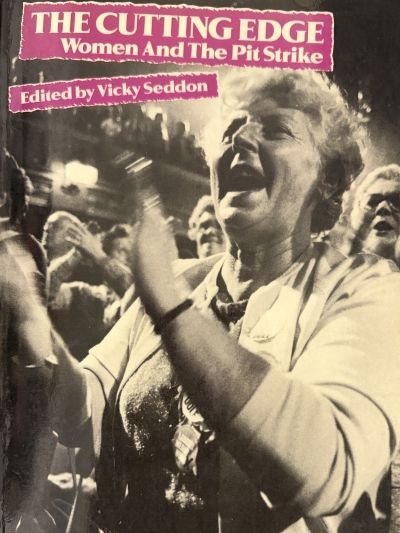
The Cutting Edge: Women and the Pit Strike, Edited by Vicky Seddon
What happened when women of the coalfields took the strike into their own hands?
When we think about the miners’ strike of 1984-1985, we often picture picket lines, miners, and pit closures. But behind the picket lines, women were organising, campaigning, and keeping their communities going.
The Cutting Edge: Women and the Pit Strike, edited by Vicky Seddon and published in 1986, provides an outlet for some of those voices. Published whilst the events were still fresh, the book brings together accounts of women’s experiences and activism during the strike, including women from Scottish mining communities.
The photograph on the front cover is incredibly striking; women are shown not as passive observers of the dispute, but as participants making themselves heard.
This book reminds us that a pit was never simply a workplace; it was part of a community. When the pits were threatened, the effects reached far beyond the men who worked underground. Families, communities, and local economies were all caught up in the struggle.
The book challenges the idea that women were simply supporting striking miners from the sidelines. Their experiences show how the strike brought women into political activism and public life, and how they became an important part of the struggle themselves.
One chapter, “Fife Women Stand Firm”, documents the experiences of women in Fife and their involvement in organising and resisting the pressures placed on their communities during the strike. Suzanne, Cath, and Margo discuss the challenges that women face during the strike. They speak about feeling isolated from the strike and wanting to find a way to contribute to the efforts.
There was an assumption that women’s involvement might be limited to domestic work; preparing food, and looking after the family while the men were out on strike. However, many found themselves taking on roles they had never imagined; speaking publicly and becoming politically active. They were not simply supporting the men on strike, they were fighting for their communities and way of life.
They organised activities for children, raised money, and supported striking families. They created opportunities for people to come together. In doing so, they helped to maintain a sense of community when life as they had known it had been disrupted.
“It was a bread and butter issue, yet we were fighting for all the things you believed were right: for the community and for the future of your children.” – Cath Cunningham, p.49
This book is an important reminder that the history of mining is not only the history of the men who worked underground. It is also the history of women, families, and communities whose lives were shaped by the pit; and who fought to protect them.
Supporters & Accreditations