Projects
“Not a penny off the pay, not a minute on the day .”
A.J. Cook, secretary of the Minter’s Federation of Great Britain [1]
General Strike
100 years ago, on 3 May 1926, millions of working people across Britain took part in the 1926 General Strike – one of the most significant moments in the history of the labour movement. Although lasting just nine days, the strike left a lasting mark on the relationship between workers, employers and government, and helped shape the world of work we know today.
The General Strike began on 3 May 1926 when the Trades Union Congress (TUC) called on workers across key industries to stop work in support of coal miners who were facing severe wage cuts and longer working hours.
Background
The General Strike of 1926 grew out of long-running disputes in the coal industry. Britain’s coal mines were returned to private ownership in 1926, after a period of nationalisation during the First World War.
In 1925, a Royal Commission on the coal industry was set up by Conservative Prime Minister Stanley Baldwin. In March 1926 it published its report, which rejected re-nationalisation and recommended wage reductions and a resultant erosion of living conditions for miners families.
In response to this commission Private Mine owners demanded significant pay cuts and an eight-hour day, to commence on 1 May. Miners’ unions resisted, warning that the proposals would push already hard-pressed workers and their families into deeper poverty.
Mine Owners also insisted on a return to district settlements, which many believed would lead to further pay cuts and increased poverty in the future. When negotiations failed, more than a million miners were ‘locked out’ until they accepted the poorer so called ‘new terms’ of employment.
Distribution of Wealth
124,000 miners in Durham in England were reported in 1929 to have earned a total of £16.3 million.
This sum was dwarfed by just 543 people nationally whose incomes at the time totalled £55 million.
Miners were earning 6 shillings and 6d a day (32.5p) and from which they paid 3 to 5 shillings (15-25p) a week in rates whilst some coal-royalty owners in the county were receiving £22,000 pounds annually and paid no rates in the area from which they derived their income. This grossly unfair distribution of wealth meant the working poor had little to spend on food and on goods and, as a result, businesses were also struggling for income. Sharing the national wealth would have been good for the whole economy.
Compare this to the words of the conservative Prime Minister Baldwin: “All the workers of this country have to take reductions in wages to help put industry on its Feet”. [2]
Why Was It So Important?
The General Strike was about more than coal mining. It became a defining moment for the organised labour movement.
Workers took a stand against falling living standards and a system that was loaded against them. It brought workers from across different industries together to demand a fairer deal.
The government responded with emergency measures, strike breakers (“volunteers”) were recruited to keep services running feeding division across the country.
Whilst the TUC called off the strike after nine days. The miners continued their struggle for seven months but eventually many were forced to return to work on worse conditions than before.
Although the strike did not achieve its immediate aims it left a lasting impact on politics, unions and workers’ rights in Britain.
Timeline of Events
Workers Walk Out:
- At one minute to midnight on 3 May 1926, the General Strike began. Over 1.5 million people halted work in solidarity with the miners. Strikers included workers from iron, steel, electricity, gas, docks, transport and printing industries. The transport system ground to a halt and deliveries of food were delayed. The government called in the army and brought in thousands of volunteers to break the strike under the guise of providing to support industry and help deliver public services.
Government Responds:
- 4–6 May: The government declares a state of emergency, recruits civilian “volunteers” and so called special constables to break the strike under the guise of providing to support industry and help deliver public services. The government also began, issuing propaganda via the British Gazette. While in response the TUC issued The British Worker to challenge this criticism. The government then took control of paper supplies to suppress the TUC’s newspaper.
Army Deployed Against Strikers and Communities:
- 7–10 May: High tensions and protests break out, prompting troop deployments in major cities like, Glasgow, Newcastle and London. Emergency powers were used to intimidate strikers turning London’s Hyde Park into a military camp.
- Troops in full war kit paraded the streets and tanks and armoured cars rolled into all the industrial cities. The Admiralty sent warships to the Thames, the Tyne, the Humber and the Clyde.
- However, overall violence was fairly limited and sporadic, with unions specifically advising members to avoid clashes and allow essential supplies to be transported.
Returns to Work:
- 11 May: Railway and bus workers start breaking ranks and returning to work.
Strike Ends:
- 12 May: The TUC calls off the strike unconditionally without securing any concessions for the miners.
- The Miner’s Federation was highly critical of the TUC’s concession. In its ‘Statement on the General Strike of May 1926’, it argued that ‘from first to last there was never any possibility of the forces arrayed against the miners accepting anything but lower wages, longer hours and district agreements-unless compelled to do so by the united strength of the working class.’
Aftermath:
- May–November: Despite this the miners bravely continue their own strike for roughly seven more months with before being starved into returning to work on employers’ terms. In no small measure due to the mechanism of the state deployed against them.
Anti-Trade Union Legislation, 1927:
- The conservative government passes the Trade Disputes and Trade Unions Act, which outlawed sympathy strikes and mass picketing.
General Strike in Scotland
Miners Lock Out: The lockout of 1926 was a pivotal moment in Scottish and British twentieth‐century history. Opening with the general strike, it continued for seven months and affected one million miners. In mining communities across Scotland armed troops were deployed to “keep order.”
Bearing in mind, almost three in every ten adult men worked in the coal industry, its impact was profound. Despite being forced back after some seven months, miners and their families displayed collective values and behaviour, displaying the solidarity for which miners were and continue to be famed.
That solidarity was further grounded in a shared history that enabled insights into issues of collective identity and collective action, illuminating wider debates about solidarity and fragmentation within working‐class communities under attack.
Solidarity and Community Support
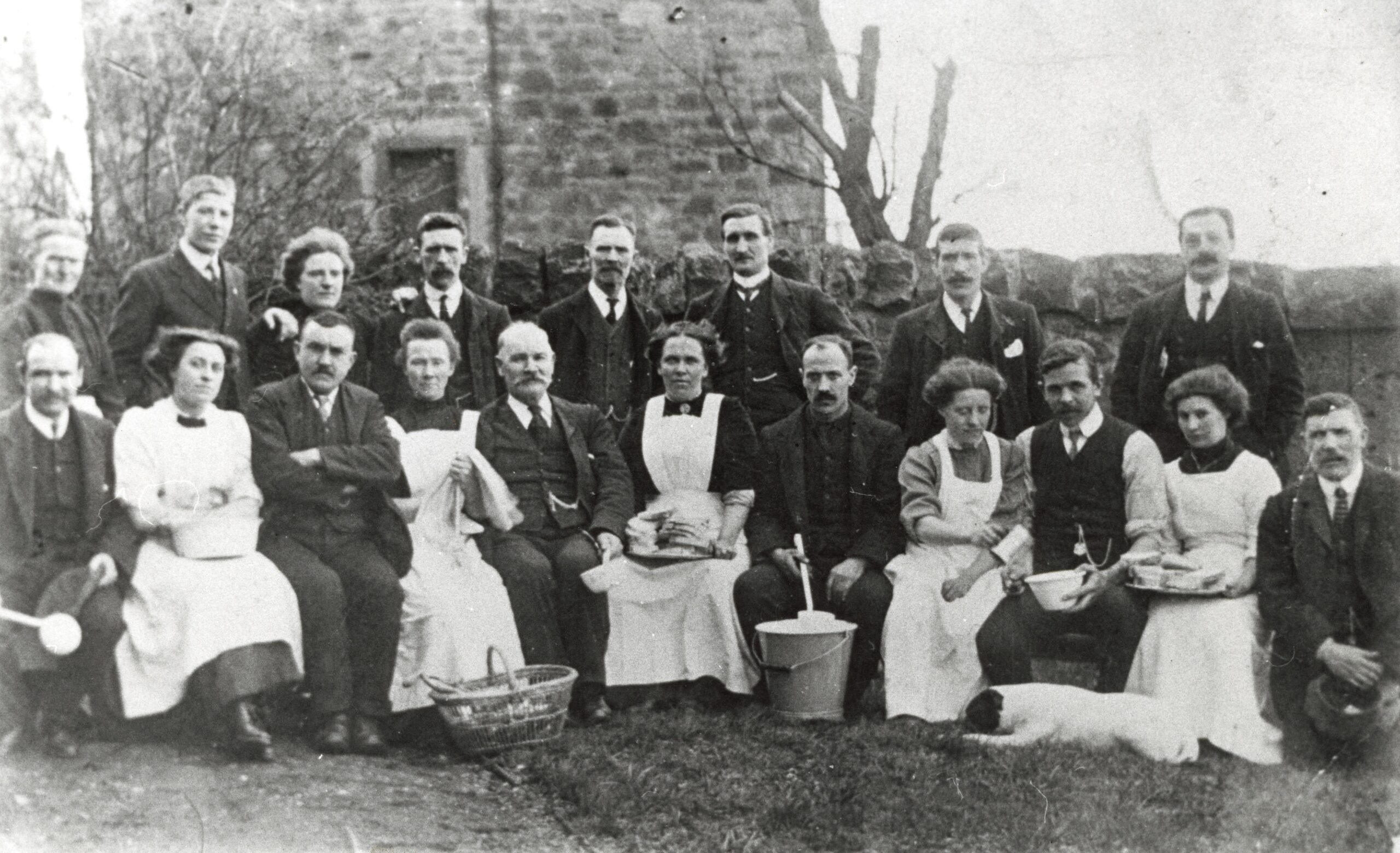
Soup Kitchens: Soup kitchens were organised, staffed by miners and their wives, and the food came mainly from donations and depended upon what was donated. More often than not meals were soup alone. As there was no strike pay considerable hardship was endured by miners and their families who in very many cases relied on these community lifelines as their only meal.
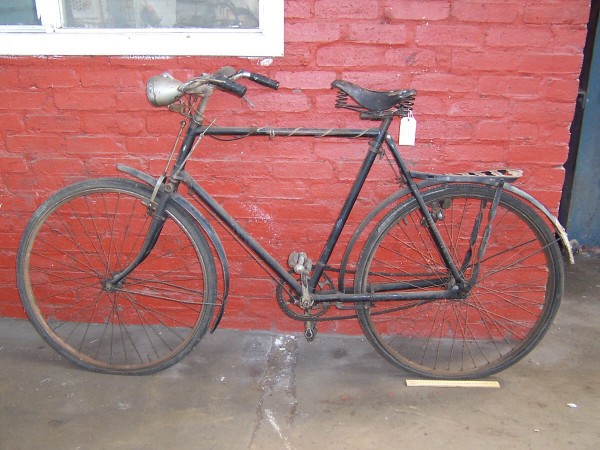
Items in our display case currently on display at the museum show photographs of:
- Newtongrange Soup Kitchen 1926
- Fund Raising for the Soup kitchen 1926
- Picture of Bicycle used during the strike. The owner went door to door selling laces to make some money to live.
Fund Raising: Funds raised to support the miners came from a variety of source, including the TUC and the wider labour movement. Notably, through the solidarity of the miners in the Soviet Union a sum of 2,600,000 roubles (£275,000) was donated which was quite a sum for 1926.
Government Actions
- The government began, issuing propaganda via the British Gazette.
- In response the TUC issued The British Worker to challenge this propaganda (despite the government blocking paper supplies to pro-strike publications). Copies of which are on display.
- In Scotland the STUC printed the Scottish Worker.
- Deployment of the Army to “protect” volunteers and “prevent disorder”. Troops were also used to “guard” stockpiles of coal.
Bruce Sutherland (Curatorial Volunteer)
August 2026
Sources Referenced:
[1] THE NINE DAYS. The Story of the General Strike told by the Miners’ Secretary published 1927 copy in display case.
[2] Stanley Baldwin made this statement during a meeting with trade union and miners’ representatives at 10 Downing Street on 29–30 July 1925. It set the stage for the industrial crisis that culminated in the 1926 General Strike.
Supporters & Accreditations